English · Português (Brasil) · Español · 日本語 · 한국어 · 繁體中文 · 简体中文
Yakko Tako Royale
奴凧 · martinez.sh
out now on Steam · out now on the App Store · Android coming soon
Kite fighting with your friends. On the couch, or online with up to 16 players.
Every kite hangs from a single string, and so does every rival's. Cut theirs before they cut yours. Two to four players in the same room, or up to sixteen players online: through Steam on desktop and the Steam Deck, through Epic Online Services on mobile, and over your local network.
# 2 to 4 on the couch · up to 16 online through Steam, EOS or LAN
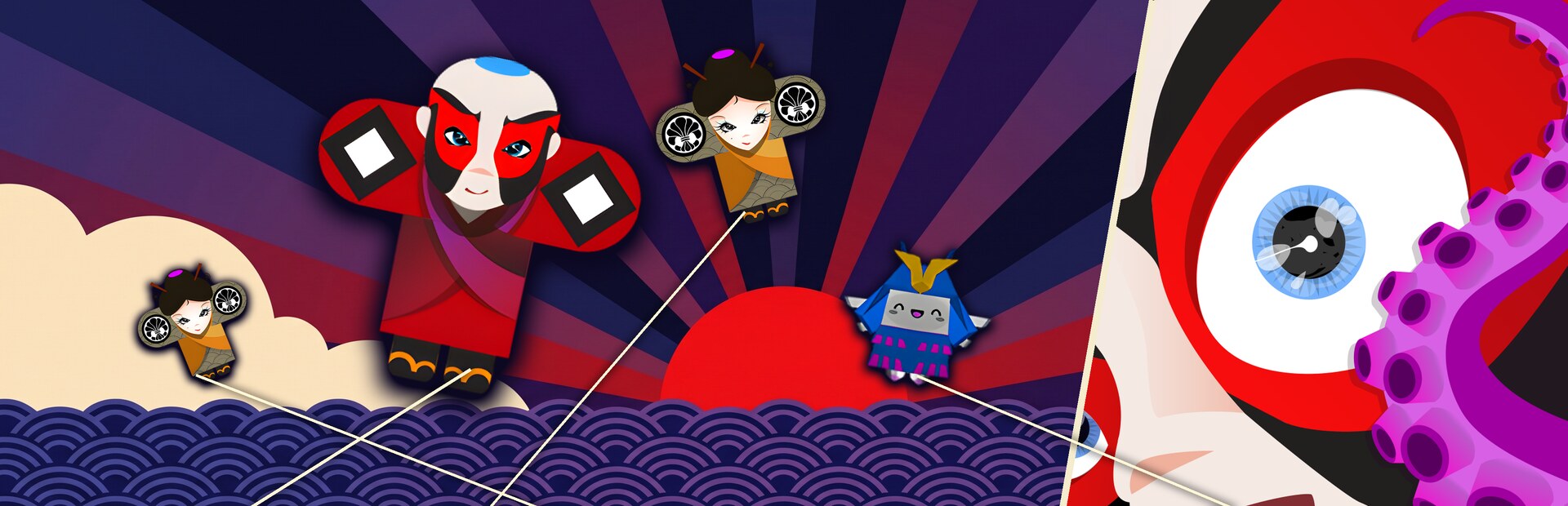
Play the demo, right here
Your kite against one to fifteen bots in the Batsu arena, in your browser, nothing to install. Same physics, same gods, same tutorial as the full game. About 85 MB the first time, cached after that. Best on a desktop or laptop, with a keyboard or a pad.
# click the game once so it gets the keyboard · a controller works too · Chrome, Firefox and Edge on desktop, Chrome on Android. Not Safari on iOS.
Sixteen players. One sky.
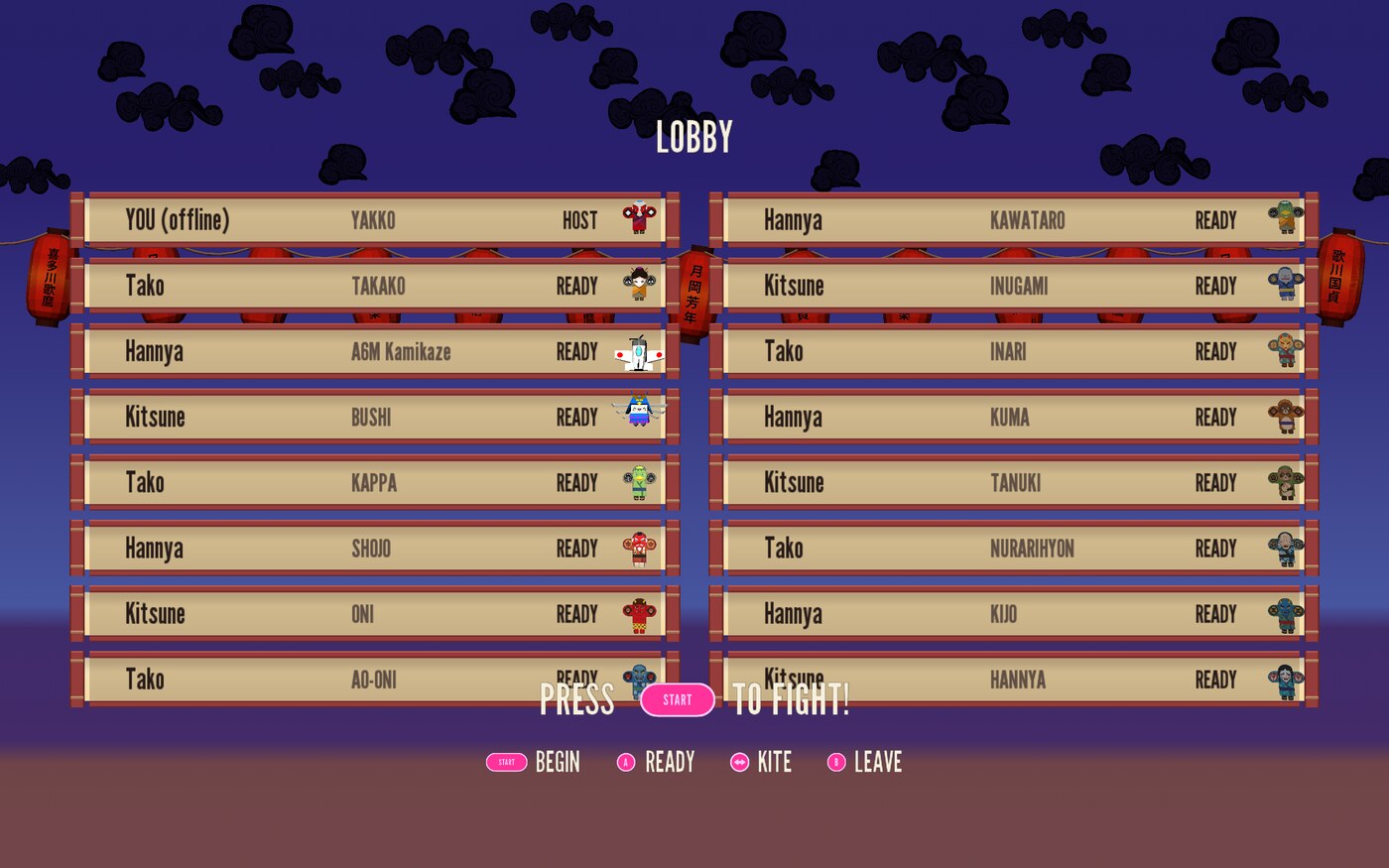
This is the big one. Host a match, and up to sixteen kites fly into the same arena from up to sixteen machines: over Steam on desktop and the Steam Deck, over Epic Online Services on mobile, or across your local network. The board stretches to four screens of sky, the camera rides with your kite, and every string in the air belongs to somebody real.
Browse open games or keep it to your friends. Ready up in the lobby, the host presses START, and everybody drops into the same fight at the same moment. When it ends, one button starts the rematch and the whole lobby comes with you.
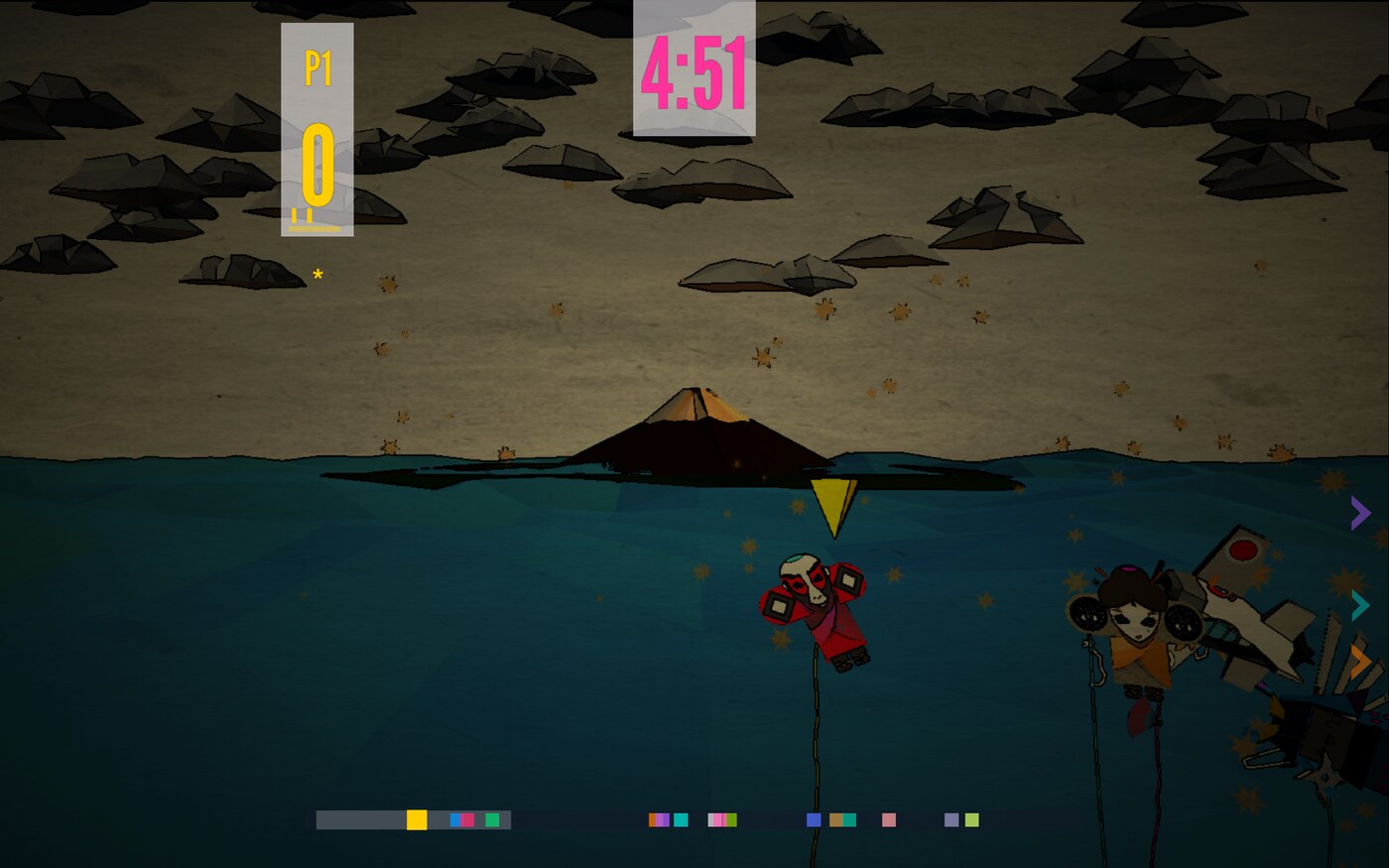
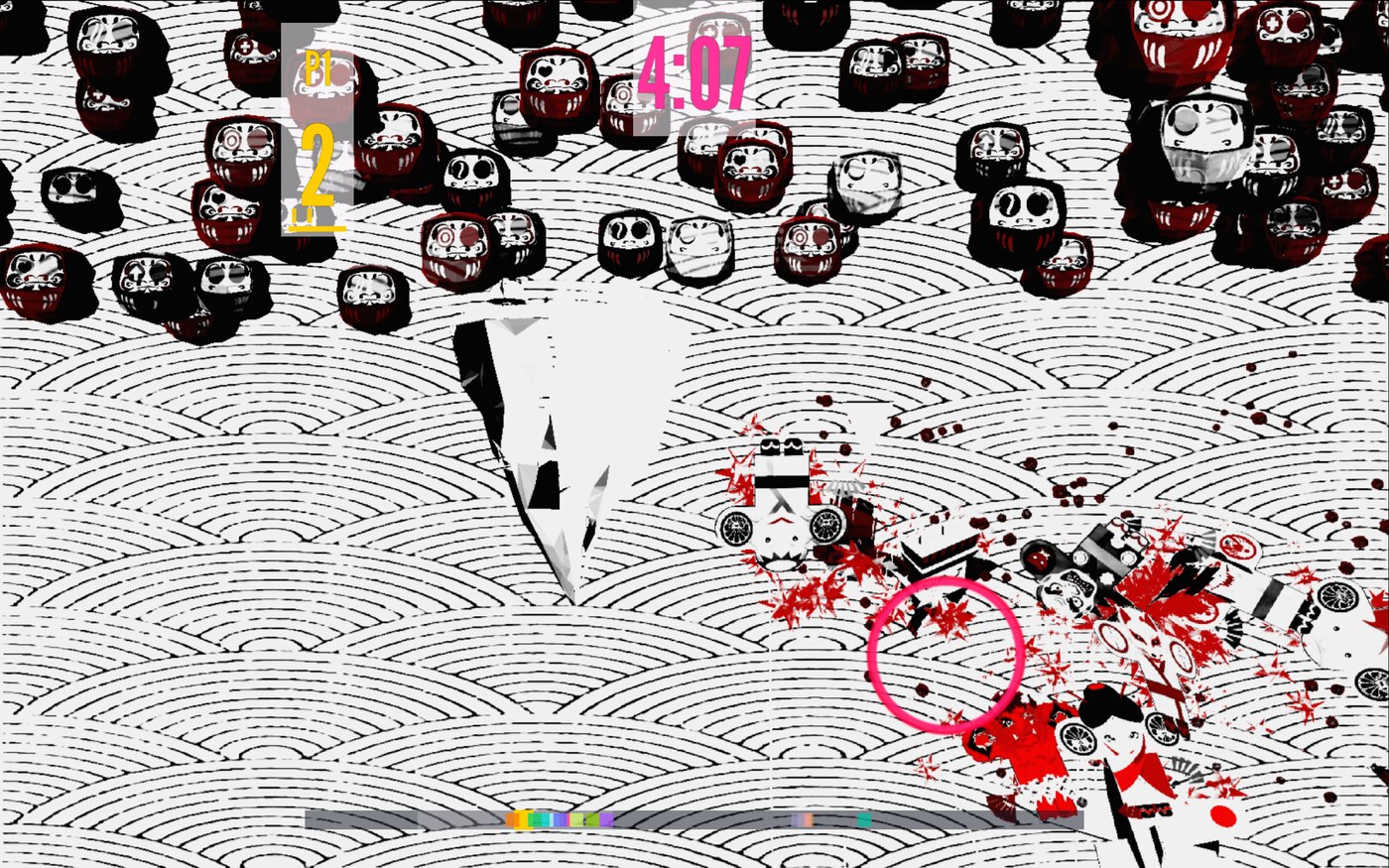
Kite fighting, the real thing
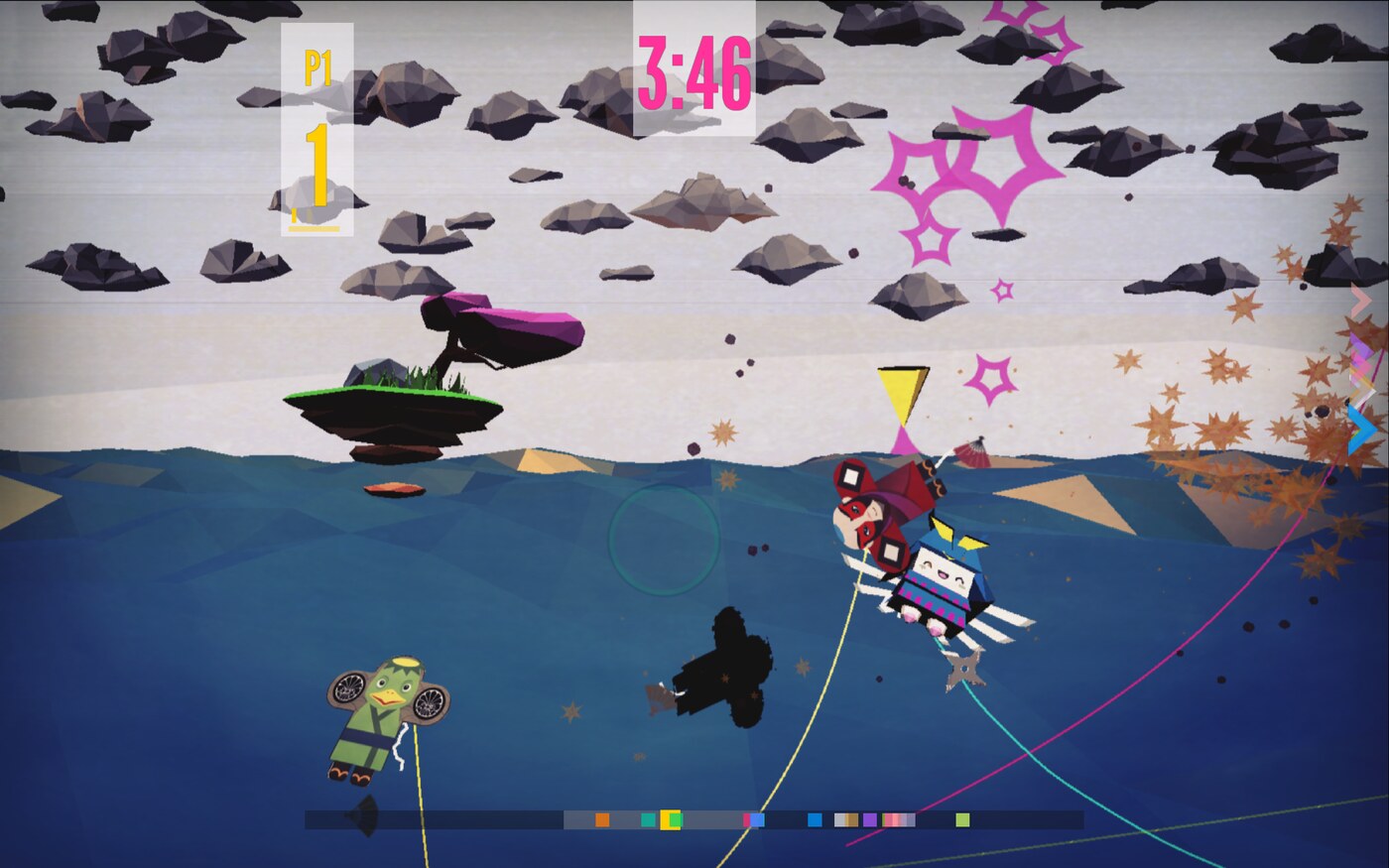
Kite fighting is a sport played across South Asia, East Asia and the Middle East, and the rule is the same everywhere. You do not shoot anybody down. You bring your line across their line, and you cut.
Yakko Tako Royale plays by that rule. Every kite hangs from a string that runs a long way straight down, and that string is the only thing anybody can take from you. Fly above a rival and their string is right there in front of you. So is yours, to them.
Hold to fly. Release, and your kite glides down. The floor is a bounce, not a death.
Steer with the shoulders, or tilt the pad if gyro is on. Your kite goes where the nose points.
Lunge to cut. The lunge is a short committed dart with a cooldown. Cross a rival's string while lunging and you land a pass. Cross without lunging and nothing happens at all.
Two passes cut the string. Damage stays on a string until somebody clears it, so a rival you cut once is a rival one pass from falling.
Now do it against fifteen other people. The rules never change. The sky just gets a lot more crowded.
Still made for the couch
The couch game is all here, exactly as it should be. Two to four players, one screen, one machine. Everybody picks a bay, picks a kite and presses START. No accounts, no waiting, because everybody is already sitting in the room.
No friends around? Add bots. Four skill levels, tuned to keep the fight interesting whether you are two on the couch or on your own.
Thirty-one kites, patang and pipa included
The roster runs from the yakkodako of Edo Japan to the fighter kites of the Indian subcontinent. Patang, chand, addha and dabba fly alongside oni, kitsune, tanuki, hannya, kappa and a long line of yokai, each one painted rather than modelled. From Brazil come the pipa, the arraia, the papagaio and the square curica, in papel-de-seda colours. The tako itself flies too, tumbling end over end when it lunges.
Every kite flies the same. What you pick is who you are on the screen, not an advantage over the player next to you. In a sixteen-player sky, that matters twice.
Four arenas, six formats
Fight above the islands of Batsu, down in the deep water of Shinkai, under the great wave in Back to Edo, or inside Yume, a dream that puts on a different look every time you enter.
Pick a timed round where the most cuts wins, a first to 3, 7 or 12, a battle royale where a cut is final, or last survivor. Online with sixteen kites, battle royale means exactly what it says: the sky empties one string at a time until one kite is left flying.
Batsu
Islands and cranes above an open sea. Room to run, and nowhere to hide.
Shinkai
The deep. Schools of fish cross the board and the anchor splits the arena in two.
Back to Edo
The great wave, in woodblock. The busiest sky of the four.
Yume
The dream. Every entry picks a different filter, so the same arena arrives as gold leaf, as a woodblock print or as blue ink line art.
The seven lucky gods, re-armed
Daruma drift across the board. Fly into one and you catch the god inside. In a duel each god does what it always did, expressed in the only currency a fight has: damage on a string, and the passes a rival needs to take it. In a sixteen-player sky, a well-timed Bishamonten is an event people will talk about after the match.
Fukurokuju
One pass cuts instead of two.
Jurojin
Rivals need four passes to cut you instead of two.
Benzaiten
Uncuttable for a few seconds, and every pass banked against you is wiped.
Bishamonten
Invulnerable and armed. Ram a rival twice and the rival is gone.
Hotei
Clears the damage sitting on your own string.
Ebisu
The cast. Your lunge reaches much further than a lunge should.
Daikokuten
The mallet. Lunge again almost at once instead of waiting out the cooldown.
An evening at the festival
Grab controllers, pick kites, play. Anyone can learn it in one round: cut their string before they cut yours. Your friend cuts you, you spend the next round hunting them. Whoever is winning gets ganged up on. Rematch is one button, so "one quick game" turns into a whole evening.
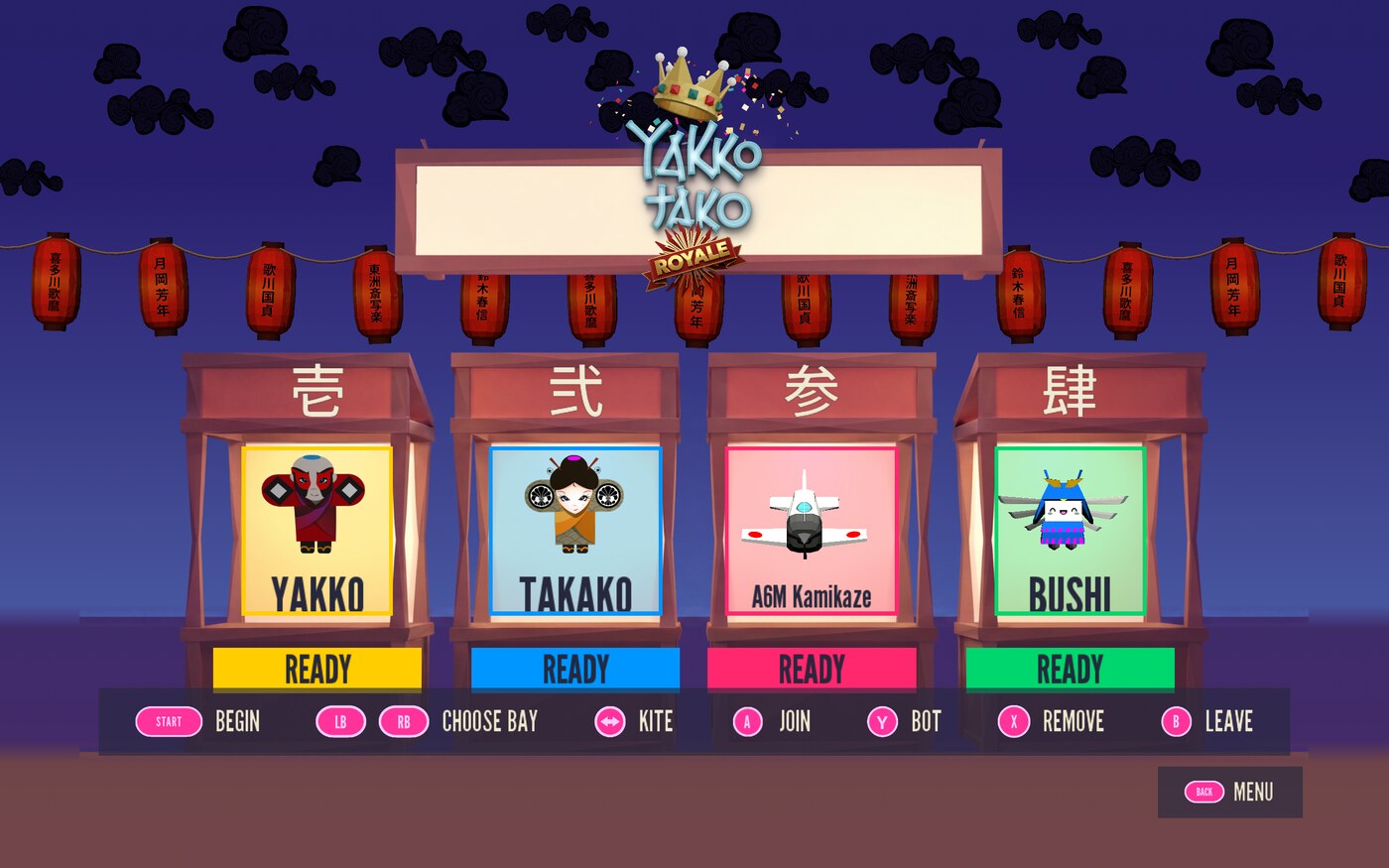
Learn it in one sitting
A hands-on tutorial runs inside a real arena with real physics, not a slideshow. Twenty-three chapters take you from your first press to the last god, and the game checks that you did each thing before moving on. Controller prompts show the buttons on the pad in your hands, whether that pad is an Xbox controller, a DualSense, a Switch pad or the Steam Deck.
Online, three ways
Steam lobbies, friend invites and an open game browser on desktop and the Steam Deck; Epic Online Services on mobile, no account needed; and LAN play on your home network. The host picks the arena and format; everybody else just presses ready.
Two engines, one game
On Apple TV, iPhone, iPad and Android it runs on mak3do, the 3D engine written in-house for Yakko Tako. On Windows, SteamOS, Linux and macOS it runs on Godot.
Original IP
No licence, no franchise, no reskin. The world, the characters and the play grow out of real cultural research.
Six languages
English, Spanish, Brazilian Portuguese, Japanese, Korean and Traditional Chinese.
Steam Deck first
Built and tested on the Deck, with gyro steering, per-event rumble and its own controller configuration.
Out now, almost everywhere
On Steam for Windows, macOS, Linux and the Steam Deck, and on the App Store for iPhone, iPad and Apple TV. Android is coming soon.
Sixteen kites go up. The last one flying takes the crown.
上がれ. Rise up, and cut them down.